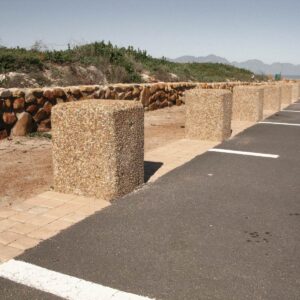
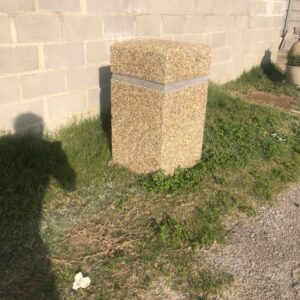
Concrete bollards

Precast Concrete Bollards

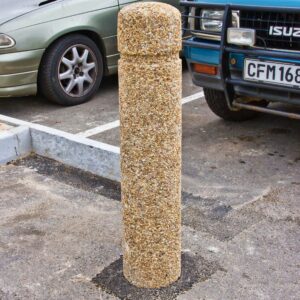
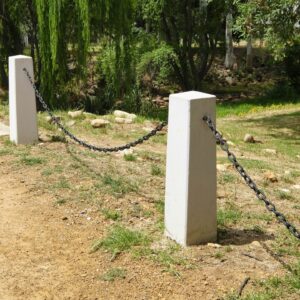
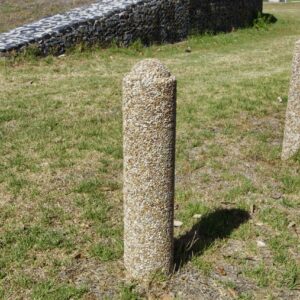
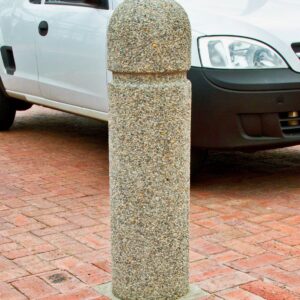
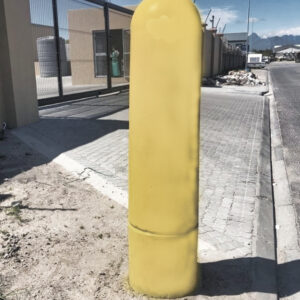
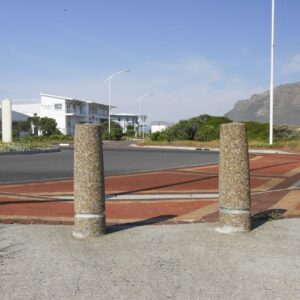
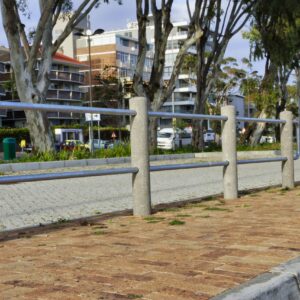
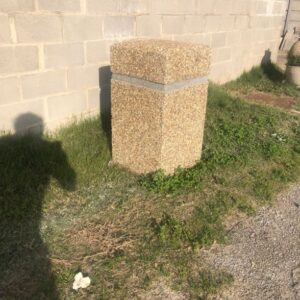
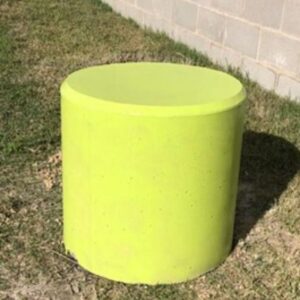
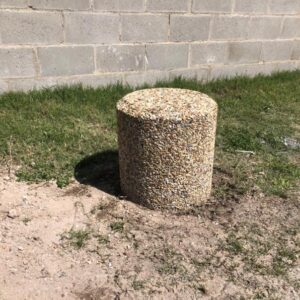
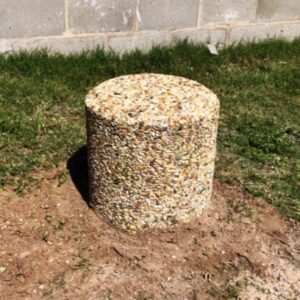
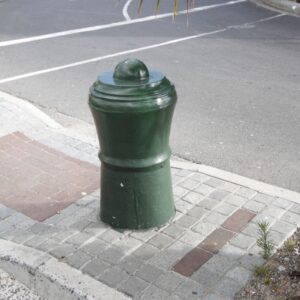
Streetscape casts 33 concrete bollard designs at our Cape Town factory and delivers them across South Africa. The range runs from taper and Stellenbosch profiles through to ball, dome, cube and barrier styles, including the Penny, Bloc 220, Bastian and Cape designs, plus chain-linked versions where a visual barrier is needed between posts.

Precast concrete bollards are specified where the barrier needs to be permanent. They are heavy enough to resist vehicle impact and removal, they need no maintenance beyond cleaning, and they hold up outdoors in South African conditions for decades. Typical applications are shopping centre forecourts, municipal pavements, school and hospital perimeters, and anywhere vehicles and pedestrians need to be kept apart.

Every bollard is cast to order, so sizes and finishes can be matched to the site. Browse the designs below, or send us your requirements and we will come back with dimensions, pricing and lead times.

Concrete bollard questions, answered

Click a question to open the answer.

What concrete bollards does Streetscape make?

Streetscape casts 33 concrete bollard designs at its Cape Town factory and delivers across South Africa. The range runs from plain round, cube and dome profiles through to named designs such as Stellenbosch, Croydon, Bastian, Victorian and Cannon, plus specialist items including a lockable ash bollard.

How heavy is a concrete bollard?

It depends on the design. The Cannon Concrete Bollard, for example, weighs around 305kg. That mass is the point, because a concrete bollard resists vehicle impact and casual removal without needing to be bolted down. Individual weights and dimensions are listed on each product page.

Can concrete bollards be linked with chains?

Yes. Streetscape casts chained versions including the Stellenbosch with chains and the Concrete Bollards With Chain design, and the Victorian is offered with or without chains. Chains turn a line of bollards into a continuous visual barrier, which suits boundary marking and parking demarcation.

How far apart should concrete bollards be spaced?

The Streetscape spacing guide recommends between 0.92 metres and 1.52 metres. For building protection, 1.22 metres is the suggested middle ground, which stops vehicles while still allowing pedestrians and wheelchair users through. For marking out parking areas, 1.52 metres is usually adequate and reduces the number of units needed.

Concrete or steel bollards, which is better?

Neither is better, they suit different sites. Concrete is heavy and hard to shift, so it works in open public spaces and unsupervised roadside positions. Steel is slimmer and lighter, so it works in tight spaces, indoor areas and positions that may need to be removed. Streetscape manufactures both.

What do concrete bollards cost?

Prices are not published because they depend on the design, the number of units and where they are being delivered. Send Streetscape the design, quantity and site location for a quote, or ask the office for the catalogue if you are still deciding which profile suits the job.